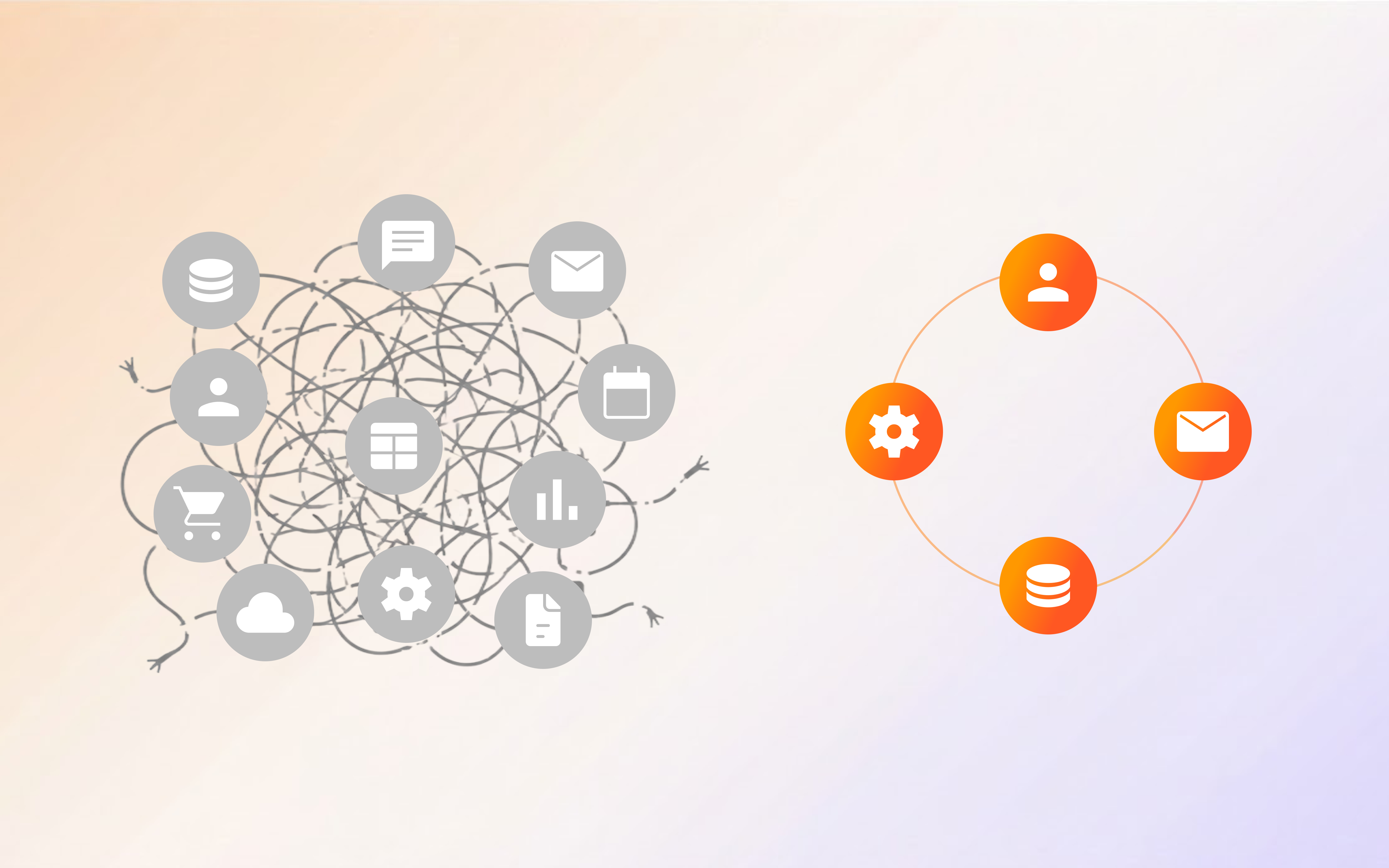

Banking compliance has become one of the most resource-intensive functions in financial services.
Compliance Is Eating Banking Alive
Global banks spent an estimated $274 billion on compliance in 2022 (LexisNexis Risk Solutions). At large banks, compliance and risk functions can account for 15-20% of total headcount. Despite this investment, compliance failures remain expensive and common.
The problem isn’t that compliance teams aren’t working hard enough. It’s that manual compliance processes are fundamentally inadequate for the volume and complexity of modern regulatory requirements. AI agents are changing the equation.
The Four Biggest Compliance Burdens in BFSI
KYC and customer due diligence
KYC requirements mean every new customer relationship requires identity verification, document collection and review, beneficial ownership determination, risk scoring, and periodic re-verification. Manual timelines of 4-8 weeks for commercial client onboarding are common.
AML transaction monitoring
A 2022 ACAMS study found that 95%+ of alerts generated by traditional rule-based AML systems are false positives. Investigators spend the majority of their time clearing alerts that turn out to be nothing.
Regulatory reporting
Banks file reports with multiple regulators on multiple schedules: daily, weekly, monthly, quarterly, annually. Each report has specific data requirements, formatting standards, and submission deadlines.
Audit trail maintenance
When regulators examine a bank, they want to see evidence that compliance processes were actually followed. Maintaining clean, complete, retrievable audit trails manually is a significant ongoing effort.
How AI Agents Handle Banking Compliance
KYC automation: from weeks to hours
The agent collects identity documents through a secure upload interface, verifies document authenticity using computer vision, extracts key fields, cross-references against sanctions lists and adverse media databases in real time, assesses beneficial ownership structures through corporate registry integrations, and generates a risk score with supporting rationale.
For low-risk clients, this process completes in minutes rather than weeks. For complex or high-risk cases, the agent flags specific issues and routes to a senior reviewer with full context already assembled.
AML monitoring: fewer false positives, better detection
AI models understand transaction patterns in context: the customer’s history, their industry, their normal behavior, the counterparty profile, and the broader network of related transactions. Banks that have deployed machine learning-based AML monitoring report false positive reductions of 50-80%.
Regulatory reporting: automated assembly and validation
For standard regulatory reports, the AI agent handles data collection, calculation, reconciliation, and formatting. For a bank filing monthly reports with three regulators, this eliminates weeks of manual assembly work each cycle.
The Regulatory Landscape AI Agents Navigate
| Regulation | Jurisdiction | Key AI Agent Use Cases |
|---|---|---|
| BSA/FinCEN | United States | AML monitoring, SAR filing, CTR automation |
| GDPR | EU/EEA | Data classification, consent management |
| PSD2 | EU | Transaction monitoring, fraud detection |
| MiFID II | EU | Trade surveillance, best execution reporting |
| Basel III/IV | Global | Capital calculations, liquidity reporting |
| FATF Guidelines | Global | KYC, beneficial ownership, sanctions screening |
| DORA | EU | Operational resilience, incident reporting |
| SR 11-7 | United States | Model risk management |
Real Costs: What Compliance Automation Changes
| Function | Manual Cost | With AI Agents | Reduction |
|---|---|---|---|
| KYC per commercial client | $500-1,500 | $50-150 | 80-90% |
| AML alert investigation | $25-75 per alert | $5-15 escalated only | 70-80% |
| Regulatory report assembly | 40-80 hours/cycle | 5-10 hours review | 85-90% |
| Sanctions screening | $5-20 per check | Under $1 per check | 90%+ |
BFSI institutions that deploy AI-assisted compliance report an average 65% reduction in compliance operating costs within 18 months. (LexisNexis Risk Solutions, 2024)
What Shogo Brings to BFSI Compliance
Shogo’s $15,000 AI Employees package is particularly suited to BFSI teams that need compliant, production-grade agents quickly. Shogo’s team builds agents to the institution’s specific regulatory requirements, integrates them with existing core banking systems, and optimizes the LLM stack for cost efficiency.
The LLM cost optimization matters in BFSI: compliance workloads involve enormous volumes. Routine screening tasks run on lightweight models; complex suspicious activity analysis uses more capable models. This comes from Shogo’s experience building compliance infrastructure for 200+ global enterprise clients, including regulated financial institutions.
The Role of Human Compliance Officers
From processor to analyst
Before automation, a KYC analyst spends 60-70% of their time collecting and organizing documents. After automation, that same analyst reviews agent outputs, investigates flagged cases, and applies judgment to edge cases. Their expertise is deployed more valuably.
The human-in-the-loop design
Well-designed compliance agents include structured escalation paths. The agent handles what it can. When it encounters a case requiring human judgment, it stops, assembles context, and routes to the appropriate reviewer.
Metrics That Compliance Leaders Track
-
KYC onboarding time: Target: reduce from 4-8 weeks to 2-5 days
-
AML false positive rate: Target: reduce from 90-95% to 30-50%
-
Regulatory report cycle time: Target: reduce by 80-90%
-
Audit finding rate: Number of compliance gaps in regulatory examinations
-
Regulatory penalty exposure: Track year over year
How BFSI Compliance Automation Fits a Broader Strategy
The KYC agent shares customer profile data with the fraud detection system. The AML monitoring agent shares flagged transaction patterns with the credit risk function. The regulatory reporting agent pulls from the same data layer as the management reporting function. Each automation creates infrastructure that the next one builds on.
The cost advantage compounds: manual compliance costs grow with headcount and regulatory complexity. Automated compliance costs grow primarily with transaction volume, a much better scaling relationship.
Choosing a BFSI Compliance AI Provider
What to look for:
-
Regulatory expertise, not just technical capability
-
Explainability as a first-class feature
-
Data residency and security controls
-
Validated model governance (SR 11-7 compliance)
-
Integration depth with core banking systems like FIS, Fiserv, Temenos, and Finacle
Shogo’s BFSI deployments are designed with explainability, audit trail completeness, and data security from the ground up.
Common Objections and Honest Answers
”Our regulators won’t accept AI-driven compliance decisions”
Regulators require that decisions are accurate, documented, and explainable. A well-documented AI agent satisfies these requirements better than an inconsistent manual process.
”Our data quality isn’t good enough”
Data quality issues are often surfaced more systematically with AI. An agent that encounters inconsistent data flags it for remediation.
”We can’t afford to get it wrong”
Manual compliance processes have false negative rates that are rarely quantified because they’re invisible until the examiner finds them. AI-assisted compliance has measurably better detection rates.
Frequently Asked Questions
Can AI agents file SARs automatically?
AI agents can draft and populate SAR narratives, but regulatory requirements in most jurisdictions require a human compliance officer to review and certify each SAR before filing.
How does AI compliance automation handle cross-border transactions?
Multi-jurisdiction compliance agents assess cross-border transactions against the requirements of all applicable regulations simultaneously.
What happens when a compliance rule changes?
The agent monitors regulatory update feeds. When a new rule is published, the agent maps it against current workflows, identifies gaps, and generates a change summary for the compliance team.
Is there a minimum size for this to make sense?
KYC and AML automation makes economic sense for any institution processing more than a few hundred customer relationships per year.
Sources
- LexisNexis Risk Solutions. True Cost of Financial Crime Compliance. LexisNexis, 2024.
- ACAMS. AML Effectiveness Survey. Association of Certified Anti-Money Laundering Specialists, 2023.
- Financial Stability Board. Artificial Intelligence and Machine Learning in Financial Services. FSB, 2024.
- Bank for International Settlements. AI in Central Banking. BIS Papers, 2024.
- McKinsey & Company. The Future of Compliance in Financial Services. McKinsey, 2024.
- Deloitte. RegTech Universe 2024. Deloitte Regulatory Strategy, 2024.
- KPMG. Compliance Transformation Survey. KPMG Financial Services, 2024.
- Oliver Wyman. The Cost of Compliance. Oliver Wyman, 2024.
- FCA. Guidance on AI in Financial Services. UK Financial Conduct Authority, 2024.
- OCC. Model Risk Management Guidance. Office of the Comptroller of the Currency, 2023.
Written by the Shogo Editorial Team. Contact us at editorial@shogo.ai.
Ready to modernize compliance? Start free or talk to the team about enterprise compliance automation.